

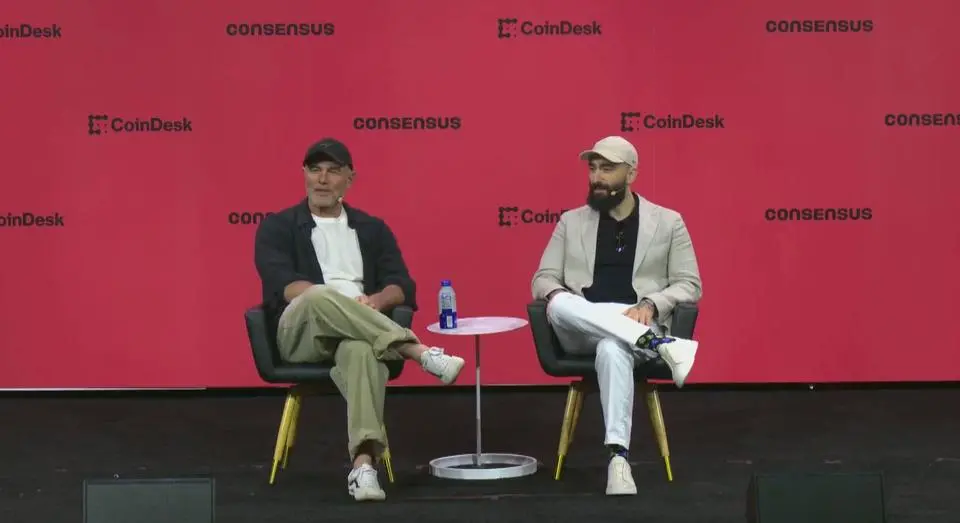
Zcash, the privacy‑focused cryptocurrency that emerged from the original Bitcoin ethos, is preparing a major technological leap that could redefine secure digital money for a post‑quantum world. In a recent presentation, Zcash founder Zooko Wilcox announced that quantum‑recoverable wallets will be rolled out within a month, with a full transition to a post‑quantum proof protocol targeted for completion within 12–18 months. The timeline marks a significant acceleration in the race to protect blockchain assets from the existential threat posed by quantum computers.
Wilcox spoke before an engaged audience, emphasizing that Bitcoin no longer holds up as the cypherpunk‑grade money it was originally meant to be. He argued that the original vision of Bitcoin as a decentralized, censorship‑resistant currency has been diluted by scaling compromises and a lack of native privacy. Zcash, he said, aims to restore that vision by integrating quantum resistance and massive scaling improvements simultaneously.
Quantum Resistance: Why It Matters Now
The threat of quantum computers to current public‑key cryptography is well documented. Algorithms such as SHA‑256 and ECDSA, which underpin most blockchains, could be broken by sufficiently powerful quantum machines, allowing attackers to derive private keys from public addresses. While large‑scale quantum computers are not yet operational, the timeline for their arrival is accelerating. Projects like Zcash are proactively hardening their protocols to ensure that funds remain secure even after quantum supremacy is achieved.
Zcash’s plan includes two phases. In the short term, quantum‑recoverable wallets will allow users to regain access to funds if their private keys are compromised by a quantum attack. This is achieved through a hybrid cryptographic scheme that combines existing Sapling and Orchard privacy protocols with lattice‑based cryptography, which is believed to be quantum‑resistant. Within 12–18 months, the entire Zcash network will migrate to a fully post‑quantum proof of stake, meaning all transactions, addresses, and shielded pools will be secured by quantum‑safe algorithms.
Scaling to Visa‑Level Throughput
Quantum resistance alone would be a headline‑worthy upgrade, but Zcash is simultaneously pursuing a massive scaling initiative. Wilcox indicated that the network aims to achieve throughput comparable to Visa and Mastercard, handling tens of thousands of transactions per second. This would be accomplished through a combination of sharding, layer‑2 solutions, and optimized consensus mechanisms.
Currently, Zcash processes about 10–15 transactions per second, limited by its proof‑of‑work consensus and the computational overhead of shielded transactions. The new roadmap proposes a shift to proof‑of‑stake, which not only reduces energy consumption but also enables faster block times and higher capacity. Wilcox noted that discussions are underway to cut block times from 75 seconds to around 10 seconds, and to introduce token‑holder voting on protocol upgrades.
These changes are designed to make Zcash viable for everyday payments, not just as a store of value. The goal is a cryptocurrency that can be used at point‑of‑sale terminals, online checkouts, and cross‑border transfers without sacrificing privacy or security.
Market Rally and Institutional Interest
The quantum‑proof and scaling announcements have already had a dramatic effect on the market. ZEC, the native token of the Zcash network, has rallied 110% over the past 30 days, outperforming nearly every major cryptocurrency. The surge was triggered by a large investment from Multicoin Capital, a prominent crypto venture firm known for backing privacy and infrastructure projects. Multicoin’s involvement signals growing institutional confidence in Zcash’s technical direction and its potential to capture a share of the privacy coin market.
Privacy coins have faced regulatory headwinds in recent years, with exchanges delisting Monero, Zcash, and others due to concerns about illicit use. However, Wilcox argued that privacy is a fundamental right and that regulated compliance is achievable through selective disclosure features built into Zcash. The “shielded” addresses allow users to choose when to reveal transaction details to auditors or regulators, striking a balance between privacy and transparency.
Adoption via Cross‑Chain Swaps and Near Intents
Adoption of Zcash’s private features is also being driven by new cross‑chain interoperability tools. The Near Intents framework, developed by the NEAR Protocol team, enables seamless swaps between assets on different blockchains. Zcash has integrated with Near Intents to allow users to convert other cryptocurrencies into shielded ZEC without leaving the Zcash ecosystem. This has significantly lowered the barrier for new users who hold assets on Ethereum, Solana, or other networks to experience private transactions.
Data from on‑chain analysis shows that the shielded pool now holds approximately 30% of the total circulating supply of ZEC. That is a substantial increase from just a few years ago, when most ZEC was held in transparent wallets. The growth of the shielded pool indicates that users are actively choosing privacy, even when it requires higher transaction fees and longer confirmation times. Wilcox noted that the upcoming upgrades will reduce the cost and latency of shielded transactions, making them competitive with transparent ones.
Historical Context and Future Outlook
Zcash launched in October 2016 as a fork of Bitcoin, but with a focus on privacy through zero‑knowledge proofs (zk‑SNARKs). Its shielded transactions hide the sender, recipient, and amount from the public ledger. Over the years, Zcash has undergone multiple upgrades, including the activation of Sapling (2018) and Orchard (2022), which improved performance and privacy.
The quantum‑proof roadmap represents the most ambitious technical overhaul since the network’s inception. It addresses a long‑standing criticism that privacy coins are fragile against future cryptanalytic attacks. By moving to post‑quantum cryptography, Zcash aims to future‑proof its users’ financial privacy.
Other cryptocurrencies, including Bitcoin and Ethereum, are also exploring quantum resistance, but none have announced such a concrete timeline. Bitcoin developers have debated post‑quantum signature schemes for years without a unified plan. Ethereum’s transition to proof‑of‑stake did not include quantum hardening. This puts Zcash in a unique position to lead the industry toward quantum‑safe digital money.
Wilcox also addressed the competition from newer privacy protocols such as Aleo, Iron Fish, and Namada. He acknowledged that each has its strengths, but argued that Zcash’s longevity, deep liquidity, and proven zero‑knowledge technology give it an enduring advantage. The upcoming scaling improvements, he said, will make Zcash the only privacy coin that can handle global retail volumes while remaining quantum‑proof.
Looking ahead, Zcash’s development team is working on a new governance model that would give ZEC holders a direct vote on critical protocol changes. This move toward decentralization is intended to prevent contentious forks and ensure that the community can adapt quickly to emerging threats. The first vote on block time reduction is expected later this year.
The combination of quantum resistance, massive scaling, and token‑holder governance could position Zcash as the leading platform for private, secure, and scalable transactions in the post‑quantum era. While the immediate focus is on the wallet rollout and the proof‑of‑stake transition, the long‑term vision is a global payment network that respects user privacy without compromising on speed or security.
Source: Coindesk News