

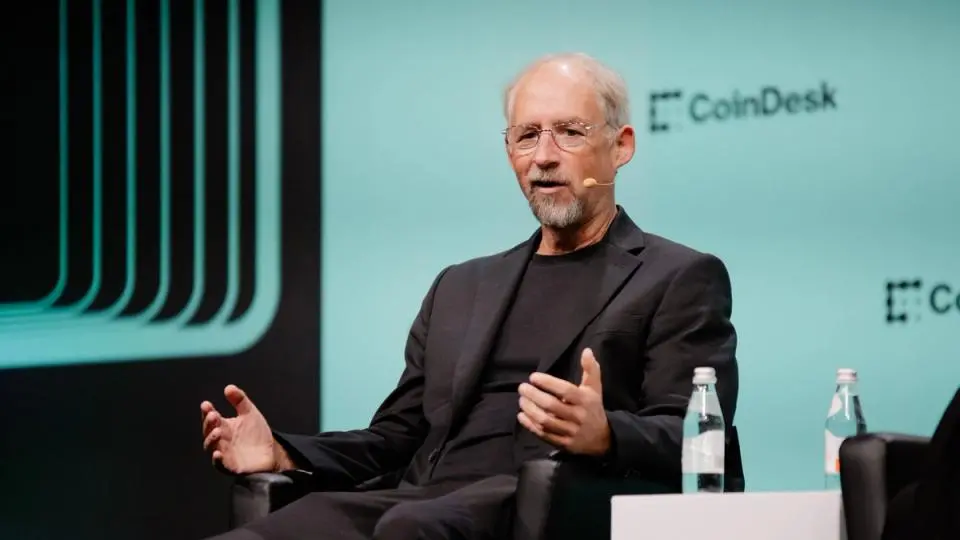
Headline: Safety First – Why Adam Back Says Bitcoin Is Winning the 'DeFi Security War'
At Consensus Miami 2026, Blockstream CEO Adam Back delivered a compelling argument for Bitcoin's supremacy in the decentralized finance space, not through complexity but through security. With a series of high-profile DeFi exploits shaking confidence in Ethereum-based platforms, Back asserted that institutional investors are increasingly turning to Bitcoin's simpler, battle-tested infrastructure as the safer bet for digital asset custody and financial applications.
The conference, which drew thousands of attendees from across the crypto and traditional finance worlds, saw Back take the stage to outline his vision for the next phase of Bitcoin adoption. His message was clear: the 'DeFi security war' is being won by Bitcoin, not because of advanced smart contract capabilities, but because of its unwavering commitment to security and decentralization.
Key Facts
- Adam Back stated that recent DeFi exploits are reinforcing institutional preference for Bitcoin’s simpler, security-focused infrastructure.
- He argued that Bitcoin layer-2 systems can support tokenization and decentralized finance without sacrificing Bitcoin’s conservative design philosophy.
- Back predicted the next major adoption wave will come through institutional portfolio allocations, sovereign entities, and pension funds gaining bitcoin exposure.
Back’s comments come at a time when the DeFi ecosystem has been plagued by hacks and vulnerabilities. According to data from various security firms, losses from DeFi exploits in 2025 alone exceeded $3 billion, with high-profile incidents involving protocols such as Euler Finance, Wormhole, and Nomad Bridge. These events have eroded trust among institutional investors who were already cautious about the regulatory and technical risks of decentralized finance.
In contrast, Bitcoin has maintained an impeccable security record over its 16-year history. While individual wallets and exchanges have been hacked, the Bitcoin network itself has never been compromised at the protocol level. This track record is a powerful selling point for Back and other advocates of Bitcoin-first finance.
Adam Back: A Pioneer’s Perspective
Adam Back is no stranger to the crypto industry. As the inventor of Hashcash—the proof-of-work system that inspired Bitcoin’s mining mechanism—he has been a foundational figure in the space since the 1990s. He founded Blockstream in 2014, a company dedicated to advancing Bitcoin’s capabilities through sidechains, the Lightning Network, and other layer-2 technologies. At Consensus Miami 2026, he brought both historical authority and technical expertise to the debate.
Back has long been a vocal critic of the complexity and security risks associated with Ethereum and other smart contract platforms. He often contrasts Bitcoin’s deliberately limited scripting language with the Turing-complete environments of Ethereum, which, while enabling innovation, also open the door to countless attack vectors. “Security is not a feature you can bolt on later,” Back said during his talk. “It has to be architected from the ground up. Bitcoin was designed with security as the absolute priority, and that’s why it remains the most trusted digital asset.”
The Institutional Shift
The audience at Consensus included representatives from some of the world’s largest asset managers, sovereign wealth funds, and pension funds. Back’s message resonated strongly with this demographic. He outlined three pillars that would drive the next wave of Bitcoin adoption: sovereign entities diversifying foreign reserves, pension funds seeking inflation hedges, and corporate treasuries allocating cash to Bitcoin as a store of value.
Recent developments support this outlook. Several sovereign wealth funds, including those from Norway and Singapore, have already disclosed small allocations to Bitcoin. In the corporate sector, companies like MicroStrategy and Block continue to add to their bitcoin holdings, and the trend is spreading to smaller firms. Back predicted that the total addressable market for institutional Bitcoin investment could reach $10 trillion over the next decade, up from roughly $200 billion today.
However, institutional adoption requires infrastructure that meets regulatory and operational requirements. This is where Back sees Bitcoin layer-2 solutions playing a critical role. He argued that sidechains like Liquid, developed by Blockstream, and protocols built on the Lightning Network can enable tokenization of real-world assets, private transactions, and even complex financial instruments—all while benefiting from Bitcoin’s underlying security.
Layer-2 Solutions: The Best of Both Worlds
Back’s vision for Bitcoin DeFi does not involve replicating the Ethereum model. Instead, he advocates for a layered architecture where the base layer remains simple and secure, while second-layer networks handle scalability and programmability. The Liquid Network, for instance, allows for the issuance of assets such as stablecoins, security tokens, and other digital representations of value. It uses a federated model with trusted functionaries, but Back insists that this trade-off is acceptable for many institutional use cases.
“Institutions don’t need global, trustless, public smart contracts to run a bond issuance or a stablecoin program,” Back explained. “They need auditability, settlement finality, and regulatory compliance. Liquid provides that without exposing the entire network to the risk of a single exploit taking down billions of dollars.”
Critics argue that Bitcoin’s layer-2 solutions are still too nascent and lack the vibrant ecosystem of Ethereum-based applications. Back counters that the quality of applications matters more than quantity, and that Bitcoin’s security-first approach will ultimately attract more capital even if it takes longer to develop.
The recent exploits in Ethereum DeFi have only strengthened Back’s argument. For example, the $625 million Ronin Bridge hack, one of the largest in crypto history, exploited a vulnerability in a sidechain that processed transactions for the Axie Infinity game. While that sidechain was built to scale a particular application, its narrower validator set introduced risks. In contrast, Bitcoin’s main chain is secured by thousands of independent miners and has never been successfully attacked at the consensus level.
Historical Context: The Evolution of DeFi and Security
To understand why Back’s message is gaining traction, it helps to review the evolution of decentralized finance. The term “DeFi” was coined in 2018 with the launch of projects like MakerDAO and Uniswap. Since then, the total value locked (TVL) in DeFi protocols has surged from less than $1 billion to a peak of over $200 billion in late 2021. However, the growth has been accompanied by a corresponding rise in hacks and exploits. The decentralized nature of these platforms often means that there is no central authority to reverse fraudulent transactions or compensate victims.
Bitcoin, by contrast, has always taken a conservative approach to innovation. Back himself has been a key figure in this philosophy. He contributed to the development of Bitcoin’s codebase in the early years and has consistently advocated for slow, deliberate changes. The Taproot upgrade in 2021 was a major step forward, enabling more complex smart contracts and improved privacy, but it was implemented after years of review and testing.
The contrast becomes sharper when examining the regulatory landscape. Bitcoin has largely escaped classification as a security, while many DeFi tokens have faced enforcement actions from the U.S. Securities and Exchange Commission. This regulatory clarity makes Bitcoin more attractive to institutional investors who need to comply with strict compliance guidelines.
The Road Ahead: Sovereign Adoption
Back’s prediction that sovereign entities will join the next adoption wave is already taking shape. El Salvador was the first country to adopt Bitcoin as legal tender in 2021, and while its experience has been mixed, other nations have shown interest. In 2025, the Central African Republic made Bitcoin legal tender, and there are reports that several other developing economies are considering similar moves. More importantly, sovereign wealth funds are starting to view Bitcoin as a legitimate reserve asset. For example, the Norwegian Sovereign Wealth Fund has indirect exposure through investments in companies that hold Bitcoin, and some analysts expect direct purchases in the near future.
Back also noted that pension funds, which manage trillions of dollars in assets, are beginning to explore small allocations to Bitcoin. The high returns and low correlation with traditional assets make Bitcoin an attractive portfolio diversifier. However, the due diligence required by pension funds often focuses on security, custody, and regulatory compliance—areas where Bitcoin excels compared to more experimental DeFi platforms.
Competing Visions: Ethereum and Beyond
While Back remains steadfast in his Bitcoin-only focus, the broader crypto industry is moving toward multi-chain interoperability. Ethereum is undergoing a major transition to sharding as part of its “surge” roadmap, aiming to achieve massive scalability without sacrificing decentralization. Other layer-1 networks like Solana and Avalanche are also vying for market share. But Back is skeptical that these platforms can match Bitcoin’s security standards. “Every additional feature and complexity introduces new attack surfaces,” he warned. “The crypto industry has a bad habit of prioritizing speed and convenience over security, and that habit is coming back to haunt us.”
His comments reflect a broader sentiment among Bitcoin maximalists, but even some Ethereum supporters acknowledge that the DeFi sector has a security problem. Several initiatives, such as insurance protocols and formal verification tools, are being developed to mitigate risks. However, Back believes that the fundamental architecture of Bitcoin is superior for long-term value storage and settlement.
Live Demonstration and Audience Reaction
During his presentation, Back also demonstrated a new feature of the Liquid Network that allows for confidential transactions, where the amounts and assets involved are hidden from the public ledger but still verifiable by auditors. This is a key requirement for many institutions that seek privacy in their transactions without giving up regulatory transparency. The audience responded with enthusiastic applause, signaling strong interest from potential users.
Following the session, several attendees expressed their agreement with Back’s analysis. A representative from a European pension fund noted that the fund had already started a pilot program using Liquid for tokenized bond settlements. “Security is non-negotiable for us,” the representative said in an interview. “Bitcoin’s layer-2 solutions give us the best of both worlds.”
Back’s appearance at Consensus Miami 2026 is part of a broader campaign by Blockstream to position Bitcoin as the backbone of a new financial system. The company has been working on projects such as Blockstream Mining Notes, a product that allows smaller investors to access Bitcoin mining hash rate through security tokens. It also operates one of the largest Bitcoin mining pools, and its sidechain technology is used by several licensed digital asset exchanges.
As DeFi continues to mature, the debate between security-first and innovation-first approaches will intensify. Back’s vision suggests that the market will ultimately reward the most reliable infrastructure—and that Bitcoin is well-positioned to meet the needs of the largest capital allocators. Whether other blockchain networks can close the security gap remains to be seen, but for now, the sentiment at Consensus Miami 2026 was clear: Bitcoin is winning the security war by staying true to its original design principles.
Source: Coindesk News