

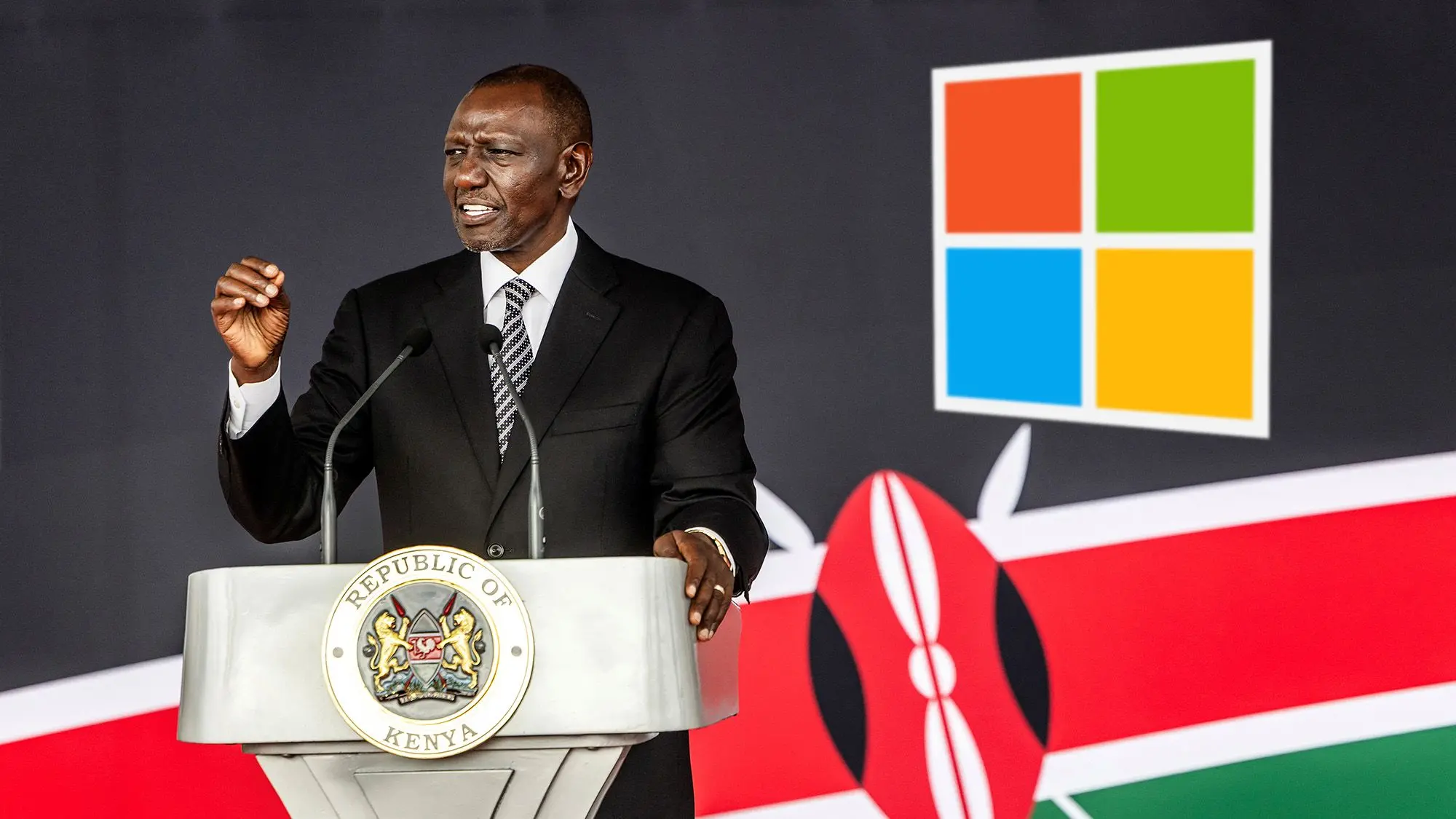
Kenya's President William Ruto has issued a stark warning regarding Microsoft's planned $1 billion artificial intelligence data center, suggesting that the facility could consume so much electricity that it would effectively 'switch off half the country.' The statement, made during a public address in Nairobi, has ignited a fierce debate about the balance between attracting foreign tech investment and maintaining essential services for citizens. Ruto's comments come as the Kenyan government faces mounting pressure over frequent power outages and rising energy costs that already burden households and small businesses.
According to sources familiar with the negotiations, the proposed data center—one of Microsoft's largest in Africa—would require a dedicated power supply equivalent to several hundred megawatts. Kenya's current grid capacity, plagued by aging infrastructure and reliance on hydroelectric power vulnerable to drought, is already strained. The president's warning appears to reflect genuine concerns that adding such a massive consumer of electricity without significant grid upgrades could destabilize the entire national power system. 'We cannot allow a single project to jeopardize the livelihoods of millions of Kenyans,' Ruto was quoted as saying. 'If this data center comes online without proper planning, it will switch off half the country.'
However, the Kenyan Ministry of Information, Communications and Technology quickly issued a statement denying that the government had failed or withdrawn from the project. 'The Microsoft data center remains a priority for our digital transformation agenda,' the ministry said. 'We are working closely with the company and Kenya Power to ensure that all necessary infrastructure improvements are made before operations begin.' The contradiction between the president's alarming rhetoric and the ministry's reassurance highlights a deeper split within the administration over the pace and scale of foreign technology investment.
Background of the Microsoft AI Data Center Deal
Microsoft first announced its intention to build a major AI data center in Kenya in early 2024, as part of a broader expansion of cloud computing and artificial intelligence services across Africa. The project, valued at $1 billion, was hailed as a milestone for Kenya's tech ecosystem, which has grown rapidly over the past decade—earning Nairobi the nickname 'Silicon Savannah.' The facility was expected to provide low-latency access to Microsoft Azure AI services for businesses and governments across East Africa, potentially accelerating digital innovation in sectors such as finance, agriculture, healthcare, and education.
Kenya already hosts several major data centers, including those operated by Amazon Web Services, Google, and local providers like icolo.io and Africa Data Centres. However, the Microsoft facility is uniquely ambitious because of its focus on AI workloads, which require not only massive computing power but also enormous amounts of electricity for both servers and cooling systems. Industry estimates suggest that a single large AI data center can consume as much power as a small city. For a country like Kenya, where only about 75% of the population has access to electricity, the prospect of dedicating such resources to a single corporate entity raises legitimate questions about equity and national energy security.
Energy Challenges in Kenya
Kenya has made significant progress in expanding electricity access over the past two decades, but the quality of supply remains inconsistent. Power outages, known locally as 'blackouts,' are common, particularly during dry seasons when hydroelectric dams produce less power. The national power utility, Kenya Power, has struggled to maintain aging transmission lines and invest in new generation capacity. In 2023, the country experienced several major grid collapses that left millions without electricity for hours. Critics argue that adding a 200+ megawatt data center without first reinforcing the grid could exacerbate these problems.
Geothermal energy, which Kenya has abundant potential for due to its position in the Rift Valley, offers a possible solution. The country is already the largest geothermal producer in Africa, with an installed capacity of over 950 megawatts. Additional geothermal plants are under development, and Microsoft has expressed interest in powering its data center with renewable energy. However, the timeline for new geothermal projects often stretches beyond the ambitious deadlines set for the data center's completion. This mismatch could force the facility to rely on the national grid during its first few years of operation, putting additional strain on an already fragile system.
Political and Economic Implications
President Ruto's public warning may be partly motivated by domestic political considerations. His administration has faced criticism for prioritizing large-scale infrastructure and technology projects over basic services like healthcare and education. By publicly raising the power concern, Ruto could be attempting to distance himself from the project's potential backlash while still allowing it to proceed behind the scenes. The contradictory statement from the communications ministry may be an orchestrated effort to manage expectations—showing the public that the president 'gets' their fears while reassuring investors that the deal remains intact.
Economically, the Microsoft data center is a major prize for Kenya, promising thousands of jobs during construction and operation, technology transfer, and a boost to the country's reputation as a regional tech hub. Tanzania, Uganda, and Rwanda have also been competing for similar investments, and losing the Microsoft deal would be a serious blow to Kenya's aspirations. The government's insistence that it hasn't withdrawn suggests that negotiations are ongoing, possibly with the company having to commit more funding for grid improvements or to build its own dedicated power plant.
Microsoft's Response and Global Context
Microsoft has not publicly commented on the president's warning, but the company has a track record of working with local governments to address infrastructure challenges. In other parts of Africa, such as South Africa and Nigeria, Microsoft has invested in renewable energy projects alongside its data centers. The company has also pledged to be carbon negative by 2030, which aligns with Kenya's goal of increasing renewable energy use. However, critics note that Microsoft's sustainability commitments often fall short in practice, with many of its global data centers still running on fossil fuels.
The tension in Kenya is part of a broader global pattern. As AI and cloud computing expand, data centers are becoming major consumers of electricity worldwide. In Ireland, for example, data centers now account for over 20% of national electricity consumption, leading to concerns about grid stability and energy costs. Similar debates are playing out in Singapore, the Netherlands, and parts of the United States. Kenya's situation is particularly acute because of its lower baseline of electrification and weaker grid infrastructure.
To mitigate the risk, experts suggest several measures: first, the government should require Microsoft to invest in additional power generation capacity, such as geothermal or solar, before the data center goes online. Second, Kenya Power should accelerate grid modernization projects using funds from international donors or private investors. Third, the data center could be designed with energy-efficient cooling systems and battery storage to reduce peak demand. Lastly, the government could negotiate a contract that includes a 'load shedding' clause—allowing the grid to temporarily reduce power to the data center during emergencies, similar to agreements used for large industrial customers in other countries.
What Happens Next?
The immediate future of the Microsoft data center in Kenya remains uncertain. The president's comments may have been a negotiating tactic to pressure the company into making greater contributions to the national grid. Alternatively, if genuine irreconcilable differences exist, the project could be delayed or relocated to another East African country. The government's denial of withdrawal suggests that both sides are still at the table. For now, Kenyans are left watching the power lines, wondering whether the promised digital future will come at the cost of their lights.
This incident underscores a fundamental challenge facing developing nations: how to harness the transformative potential of artificial intelligence and cloud computing without sacrificing basic infrastructure for the majority. Kenya's balancing act will be closely watched by other countries in Africa and beyond. Whether the outcome is a groundbreaking renewable-powered data center or a cautionary tale of overambitious tech investment will depend on the next few months of negotiations between Nairobi, Microsoft, and the energy regulators.
Source: Windows Central News