

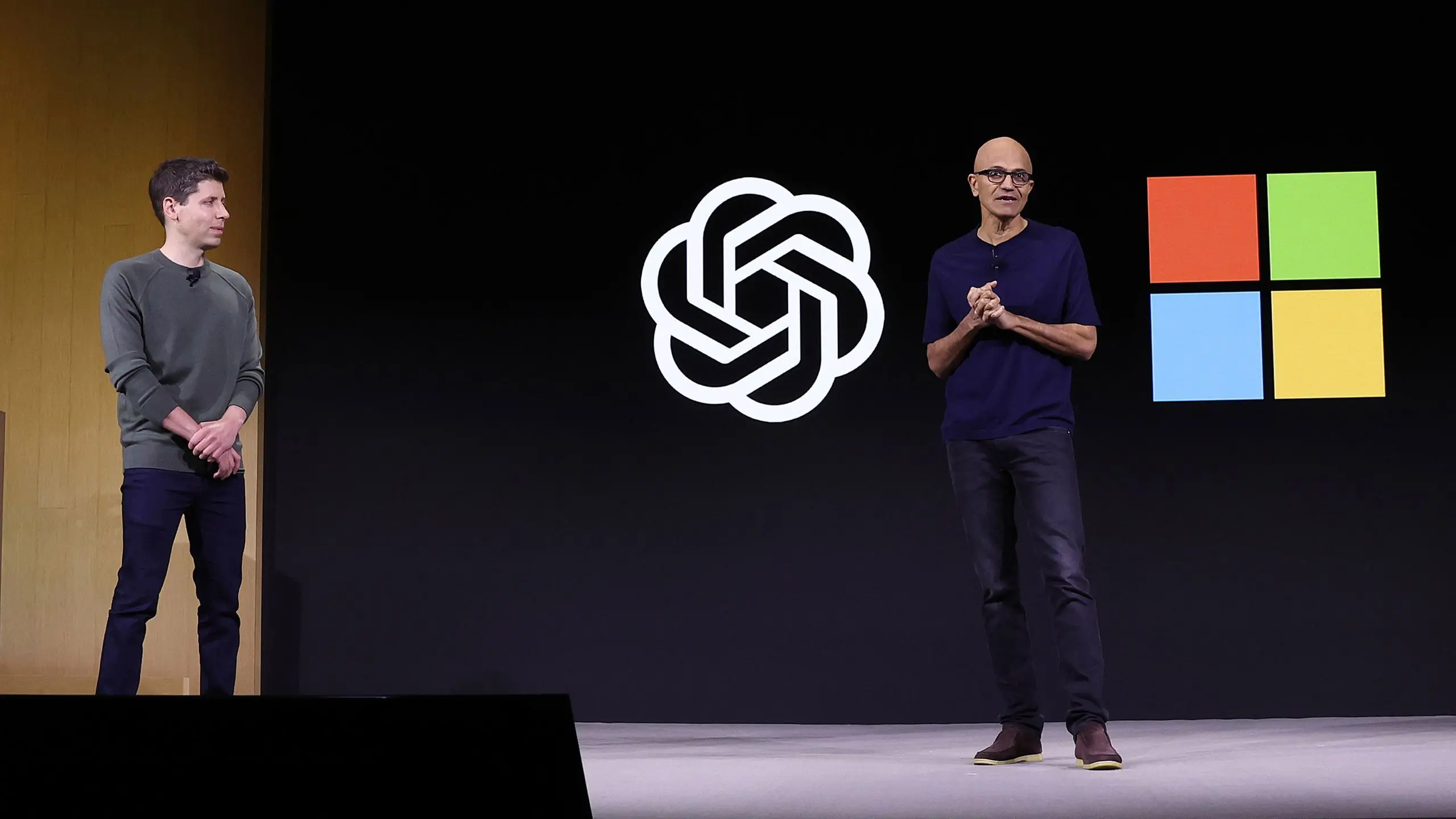
In a revealing interview that has sent ripples through the tech industry, Microsoft CEO Satya Nadella offered his blunt assessment of the chaotic firing of Sam Altman from OpenAI in November 2023. Nadella suggested that the ouster was not, as the board had claimed, due to Altman's consistent lack of candor, but rather driven by jealousy and internal power struggles. He described the entire episode as "sort of amateur city," a remark that underscores his frustration with the governance lapses at one of the world's most important artificial intelligence companies.
The statement came during a wide-ranging discussion about Microsoft's partnership with OpenAI, which has invested billions of dollars into the startup. Nadella's comments are significant because they challenge the official narrative put forth by the OpenAI board at the time of Altman's firing. The board had stated that Altman “was not consistently candid in his communications with the board, hindering its ability to exercise its responsibilities.” However, Nadella’s alternative explanation points to deeper personal animosities and a lack of professional discipline among board members.
The Firing That Rocked Silicon Valley
On November 17, 2023, the board of OpenAI abruptly announced that it had removed Sam Altman as CEO, citing a loss of confidence. The decision stunned employees, investors, and the broader tech community. Within days, nearly all 700 OpenAI employees threatened to resign unless Altman was reinstated, and Microsoft quickly offered to hire him and any staff who wished to leave. The board’s actions were widely criticized as hasty and poorly communicated, leading to a chaotic weekend of negotiations. Ultimately, Altman returned as CEO just five days later, with a new board installed and several original board members stepping down.
Nadella’s characterization of the board’s behavior as “amateur city” aligns with criticisms that the board lacked the experience needed to oversee a multi-billion-dollar enterprise. The board at the time included figures like Ilya Sutskever (OpenAI’s chief scientist), Adam D’Angelo (CEO of Quora), Tasha McCauley (entrepreneur), and Helen Toner (a researcher at Georgetown’s Center for Security and Emerging Technology). None had previous experience managing a high-profile CEO transition in a company as fast-moving as OpenAI.
Jealousy Over Candor
During the interview, Nadella explicitly stated that he believed the real motivation behind Altman’s firing was jealousy. “When you have a group of people who are brilliant but also have massive egos, sometimes jealousy becomes the motive,” he said. “It’s not about candor—that was just the excuse.” Nadella’s theory has found support from unnamed sources close to the board’s deliberations, who claimed that some board members felt marginalized by Altman’s rapid fundraising and high public profile. Altman had become the face of generative AI, appearing at congressional hearings and on international stages, while the board remained largely anonymous.
The notion that Altman was fired for being too visible aligns with reported tensions between Altman and certain board members who wanted a more cautious, safety-first approach. However, Nadella argued that such disputes should have been handled through proper governance channels, not a sudden coup. “If you have concerns, you address them in the boardroom, not by throwing a grenade and walking away,” he added. His remarks imply that the board’s actions were reckless and damaged both OpenAI and Microsoft’s strategic interests.
Microsoft’s Stake and Response
Microsoft’s investment in OpenAI is among the largest in tech history, with commitments totaling over $13 billion. The partnership gave Microsoft exclusive access to OpenAI’s advanced models, which power products like GitHub Copilot, Azure OpenAI Service, and the Bing chat feature. When Altman was fired, Microsoft CEO Satya Nadella was reportedly blindsided, having learned of the decision only minutes before the public announcement. The lack of communication infuriated Nadella, who immediately began working to reverse the decision.
Nadella’s behind-the-scenes role in bringing Altman back was critical. He not only offered Altman and OpenAI staff immediate jobs at Microsoft but also pressured the remaining board members to resign. Within days, interim CEO Emmett Shear stepped down, and a new board was formed with Bret Taylor (former co-CEO of Salesforce) as chairman, along with former Treasury Secretary Larry Summers and Quora CEO Adam D’Angelo. Altman’s reinstatement was announced on November 21, with a statement that the parties had “reached a consensus in principle.”
The episode highlighted the unusual structure of OpenAI, which operates as a capped-profit entity controlled by a non-profit board. This structure was designed to ensure that the company prioritized safety over profits, but it also left it vulnerable to governance failures. Nadella’s criticism suggests that the non-profit board lacked the experience to manage a high-stakes company at the frontier of AI development.
Broader Implications for AI Governance
The Altman firing and subsequent fallout have sparked wider debates about how to govern powerful AI companies. Many experts argue that the current model, where a small non-profit board holds ultimate power over a for-profit subsidiary, is unsustainable. Nadella’s “amateur city” comment underscores this criticism. He noted that Microsoft, as a seasoned publicly traded company, would never allow such a situation to arise. “We have processes, checks, balances, and a board that understands its fiduciary duty. OpenAI’s board seemed to forget that they had a duty not just to the mission but also to the employees, investors, and the broader public,” he said.
In the wake of the crisis, OpenAI has announced it will restructure its board and governance practices. Bret Taylor has been tasked with leading a review of the company’s governance, with an eye toward establishing clearer lines of accountability. Meanwhile, Sam Altman has returned to his role with renewed authority, but the scars of the episode remain. Employees have reported a drop in trust, and some top talents have left to start competing ventures.
Nadella’s willingness to speak openly about the board’s failings is unusual for a CEO of his stature, but it reflects the importance of the OpenAI partnership to Microsoft’s AI strategy. Any disruption to that relationship could have severe consequences for Microsoft’s cloud business, which increasingly relies on OpenAI’s models to drive growth. By blaming jealousy and amateurism, Nadella is also sending a message to the technology community: that Microsoft will not tolerate governance instability in its key investments.
Historical Context: Boardroom Battles in Tech
The OpenAI boardroom saga is not without precedent in the tech industry. Steve Jobs was famously ousted from Apple in 1985 after a power struggle with then-CEO John Sculley and the board. Jobs later returned in 1997 to save the company from bankruptcy. Similarly, Travis Kalanick was forced out of Uber in 2017 amid a series of scandals, though his departure was seen as necessary for the company’s reform. However, unlike those cases, the OpenAI board’s action was based not on performance failures but on personal grievances, according to Nadella’s account.
Nadella also drew parallels to his own experience at Microsoft, where he orchestrated a cultural turnaround after the departure of Steve Ballmer. He emphasized that leadership changes should be handled with transparency and due process. “You don’t fire a CEO because you’re jealous of his success. That’s a sign of a broken board,” he said. His remarks have been interpreted as a broader critique of the venture capital and startup ethos, where founders are often lionized and boards are seen as rubber stamps.
As the AI industry continues to evolve, governance will remain a central issue. Regulators in the United States and Europe are already examining whether existing laws are sufficient to oversee companies like OpenAI, which have immense power over the development of transformative technology. Nadella’s comments add weight to the argument that boards must be professionalized and held accountable.
For now, the immediate crisis at OpenAI has passed, but the underlying tensions remain. Satya Nadella’s blunt assessment serves as a cautionary tale about the dangers of letting personal rivalries override sound governance. As he put it, “We need to grow up as an industry. We can’t have these amateur boardrooms making decisions that affect the entire world.”
Source: Windows Central News